The Fear of Being Seen: Why Talented People Hold Themselves Back From Visibility
People think that I’m bold and unafraid because of how often they see me pop up on the timelines. If they only knew the truth!!! I’ve had to do the work to actively overcome the doubt and the fear. That work doesn’t even mean the proof of concept, sometimes it simply means just doing the thing that scares me the most despite being terrified. Why was I so scared? Well the world isn’t always kind to people who dare to be different and so I want to remind you that you’re not afraid of being seen because something is wrong with you. You’re afraid because, at some point in your life, being seen wasn't safe. Nobody embraced you for who you were, so you learned to protect yourself.
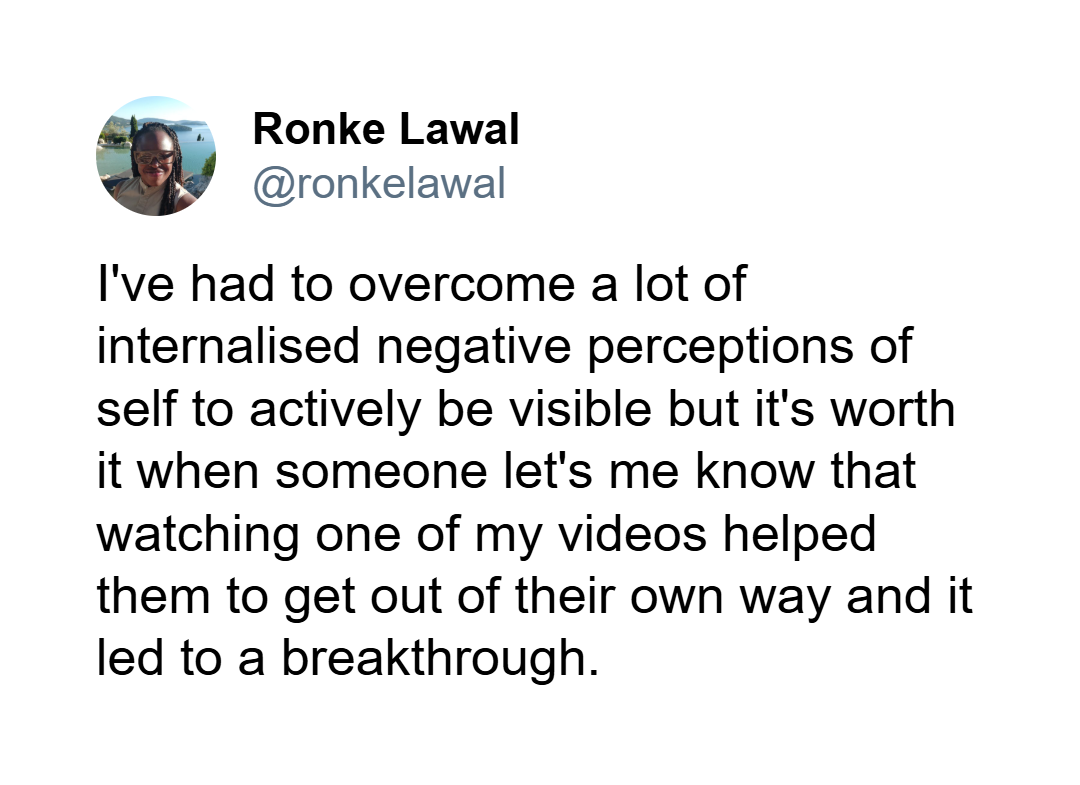
I wish I could tell you it's something you deal with once and never think about again but unfortunately that isn't the case. Visibility is a practice and some days it feels natural and fun and it flows and other days I feel that old hesitation creep back in. Being honest about that matters to me, because I don't want you to think the people who show up confidently never struggle.
People often assume that when I talk about visibility, I mean personality. Loud versus quiet, extrovert versus introvert. Visibility is about being present as who you really are and letting people see your expertise, your ideas and your work without trimming yourself down first. I've met introverts who are wonderfully visible because they share their thinking clearly and consistently. I've also met extroverts who talk all day and still hide the most important parts of themselves. The founders, entrepreneurs, senior professionals and creatives I work with are rarely short on talent, they’re short on the permission that they need to give themselves to be seen. They need to heal from the pain of whatever made them feel unsafe before and they need to get over the fear of being embarassed.
Where the visibility wound comes from
Think back to a time you tried to show up as yourself - a classroom, a family dinner, your first job or a meeting. You shared an idea or an opinion or a bit of your real self, and the response told you that you were too much, or not enough, or that you simply didn't fit. Most of us have a moment like that and most of us store these moments as evidence to prove that we should keep ourselves hidden. Those moments become stories and those stories start to sound like your own voice. You begin to believe them and eventually they become your code of operation. So you don't speak up until you're certain, you don't take the credit, you don't draw attention to yourself, you wait until everything is perfect. These unspoken rules begin to shape everything that you do and how you put yourself out there. But they aren't facts about you. What's true is that you weren't made to feel safe and that's a statement about your environment, not a judgement on who you are. It’s your visibility wound, and like any wound it doesn't heal by being ignored, it heals when you start to look at it honestly and give yourself the care you probably didn't get at the time.
Humility and self-erasure are not the same
Lots of capable people struggle to talk about their achievements because they were raised to value humility especially in a country like the UK in which being humble is seen a virtue. “Nobody like a show off” is a common British phrase which is fine in moderation but it holds a lot of us back when we’re trying to move forward in our lives. Humility is a lovely quality but when it turns into self-erasure it becomes a problem. Humility says you don't need to boast continuously whilst self-erasure says you shouldn't be noticed at all, and that costs you opportunities, recognition, income and influence without anyone ever telling you it's happening.
A simple way to check where you sit is to notice what you do when someone compliments your work. Do you receive it and embrace it or do you wave it away within a second? When something goes well, do you share it or do you tell yourself it was no big deal? If your first instinct is always to make yourself smaller, it's worth asking whose voice you're really hearing when you do that and why. I want you to sit with this for longer than it takes to read this blog - go and write this down and sit with the answers. It’s important to recognise what is going on internally that holds you back so that you can do the work to resolve it.
Carrying extra scrutiny
Individuals from minoritised and marginalised backgrounds carry the burden of what it’s like to be visible, for being “different” and yet being invisible when it comes to being rewarded and respected. As a Black woman, I know what it is to be scrutinised more heavily. It comes from outside my community, and sometimes from within it too. There is nearly always someone with an opinion on how I look, sound, what I say online and offline and what I should have said instead. Because I’ve become accustomed to this I know that I cannot allow it stop me from achieving my goals, it’s hard and I have a solid community around me that helps but I keep moving forward. I don't believe the answer is to disappear, because when the people with the most to offer are silent, the rooms we want to change stay exactly as they are. I'm doing my best and for me that is good and good enough. I'd like you to give yourself the same standard.
Visibility is not attention seeking
This is the objection I hear more than any other when I run my personal branding training sessions or 1:1s, so I want to address it directly. Being visible does not mean chasing attention, visibility is about being found by the people who need what you know and adding value in spaces that need your voice. When you stay hidden, you aren't protecting yourself from judgement. You're keeping your work away from the clients, collaborators and opportunities that were meant to find you. Someone out there is searching for exactly the expertise you have, and they can't hire, recommend or learn from someone they can't see.
Five ways to start building a more confident presence
Healing the wound is inner work but it helps to have something practical to do alongside it. These are the five things I'd begin with.
1. Start small and keep a steady pace. You don't need a big launch or a perfectly planned campaign. Share one thought a week online - LinkedIn or a newsletter if you have one, leave a thoughtful comment on someone's post, or speak up in a meeting where you'd normally stay quiet. I don't want you to overwork yourself or burn out. Consistency, for me, is about flow, so take your time to learn and grow, give yourself room to find your way, and stay laser focused on where you're headed.
2. Keep an evidence file. Write down your wins, the kind things people say about your work and the problems you've solved. Save the emails and the messages. When the old stories that I mentioned earlier get loud and tell you that you're not enough, you'll have real proof sitting right next to them, and it's much harder to argue with a list of facts than with a feeling.
3. Say what you've done, plainly. You don't need to inflate anything or dress it up. "I led this project and retention went up by 20 percent" is simply information. Practise saying that kind of sentence out loud without apologising, adding a disclaimer or laughing it off. Record yourself either via video or voice note and watch or listen to yourself back. It will feel strange the first few times, and then it will start to feel normal.
4. Find your encouragers and stay close to them. There are very few people who genuinely advocate for you, and I know that from experience. So be deliberate about it. Look for the one or two people who can see what you're building and will tell you so, and let them be the voices you carry with you. The naysayers will always be there, but they don't get to be the loudest in your ear.
5. Let go of perfect and aim for the best outcome. Somebody will judge what you put out whether it's polished or not, so you may as well share it while it's honest. Then ask yourself the question we so rarely ask. We spend so much time rehearsing the worst that could happen that we forget to picture the best. What if it goes well? What if the right person sees it? I keep repeating this because I want you to believe it, and because I want to believe it too.
Give yourself permission
If I can show up as I am right now, with everything I've been through and all the noise that comes with it, then so can you. I'm not saying it will be easy or that it will always feel safe. I'm saying that you deserve to try. Somewhere along the way, someone made you feel like you didn't deserve to take up space. They were wrong. You do.
Start showing up, let yourself be see, and keep on healing that visibility wound as you go.