Women Don't Need Saviours. They Need Sponsors
Women are not under-represented in conversations because they lack the words, the ideas or the courage to share them. They are over-qualified, over-prepared and systematically under-heard and in 2026, that remains the reality for far too many women in workplaces, boardrooms and leadership spaces across every industry.
Women are still talked over in meetings, still undermined in key decisions, still watched more closely and credited far less often than their male counterparts. This is not a confidence problem and it is not a pipeline problem. It is structural, it is systemic and it is long overdue a serious and honest reckoning.
Society has spent decades telling women to lean in, speak up and take up space, as though the burden of being heard was always theirs to carry but that narrative was wrong from the very beginning. The barrier was never a woman's unwillingness to use her voice, it was and continues to be, the architecture of the rooms she walks into and the people who decide whose contributions matter once she's there.
When we focus all our energy on coaching women to be louder, bolder or more assertive, we risk a propensity to paper over a structural fault line and asking individuals to solve a collective problem. That framing causes real damage, particularly to women who are already performing at the highest level and still being made to wait for recognition that their peers receive automatically. That is not to say that the coaching in and of itself is not essential it is just important to recognise the entire picture and reality of our times.
Making space for women's voices is not a diversity tick-box exercise or an annual International Women's Day post. It has to be about consistent, active and visible advocacy every single day of the year and that requires the people with structural power to do work that is often unglamorous and rarely celebrated.
For Black women and women from marginalised communities, the reality is even starker. We are often already in the room, saying the right things, showing up consistently, contributing at the highest level and we are still the last ones heard. The barriers do not simply stack on top of each other at the intersection of race and gender; they multiply and compound in ways that are rarely acknowledged openly and even more rarely addressed with any structural seriousness.
A Black woman's directness is read as aggression whilst her silence is read as agreement. Her excellence is still treated as insufficient evidence of capability, and she is asked to prove herself repeatedly while others receive the benefit of the doubt as a default setting. This is not hyperbole - at least not in my experience. This is the lived experience of women navigating workplaces, leadership pipelines and professional spaces every single day and it represents a leadership crisis that to be honest need to stop mislabelling as a diversity issue.
There is also a particular kind of gatekeeping that tends to go unexamined, which is the dynamic where women who have navigated these systems become their guardians rather than working to dismantle them. We need to name that too because structures do not sustain themselves without people choosing to uphold them, sometimes consciously and sometimes not. Real inclusion requires all of us to interrogate our own role in the rooms we occupy and the dynamics we either challenge or quietly enable.
Real advocacy does not live in keynote speeches or annual pledges. It lives in the ordinary, unremarkable moments that accumulate into culture over time. It looks like interrupting the meeting when she gets talked over, not afterwards in a private message but in the moment itself. It looks like crediting the idea she raised three slides ago, by name, out loud and in front of the room. It looks like acknowledging her when she makes valid but unpopular points, and not mistaking her silence for agreement or her directness for aggression. It looks like refusing to make the most qualified person in the room prove herself twice just to be taken seriously and it looks like not infantilising the women around you, because women do not need saviours we need sponsors.
There is a significant and meaningful difference between the two and it matters enormously for how we show up for women in professional spaces. A saviour speaks on behalf of women and a sponsor ensures that women get to speak for themselves and that when they do, they are heard, credited and advanced as a result. Sponsorship is active and it requires you to stake something real, whether that is your credibility, your platform, or your access, on behalf of someone whose voice and contribution deserves to be amplified and recognised.
That is what consistent advocacy looks like in practice. It is not a gesture and it is not a post. It is a commitment played out in daily choices, in who you amplify, who you credit, and who you finally stop making wait for opportunities they have already earned.
Events like Step Forward, organised by AllBright Everywoman, are a powerful reminder of what it looks and feels like when a space is genuinely built for women rather than retrofitted to accommodate them as an afterthought. That quality of intentionality is rare, but it is also replicable when people choose to prioritise it with consistency and genuine commitment rather than seasonal goodwill.
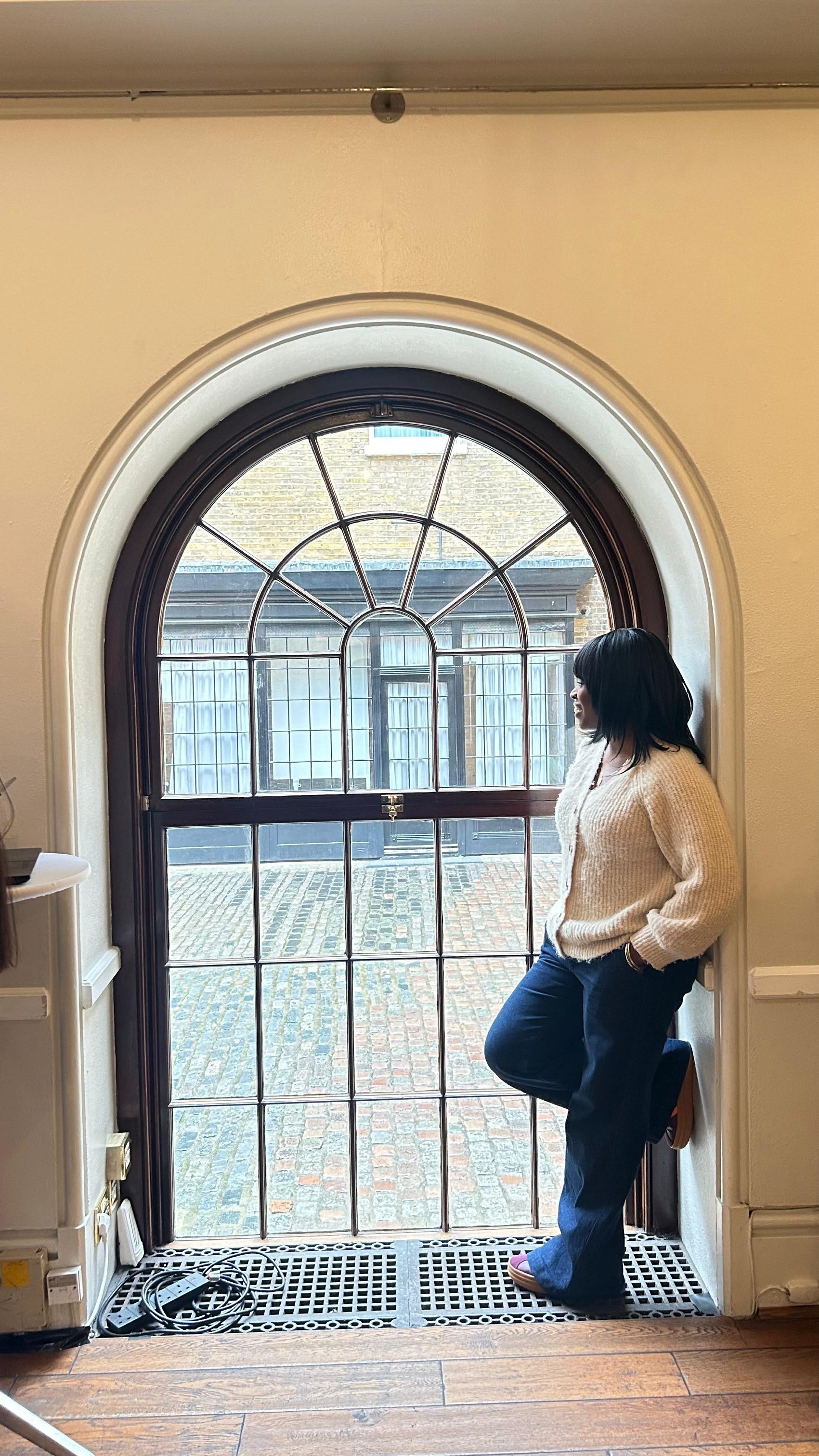
Step Forward 2026
The question is not whether we know what real inclusion looks like, because most of us do. The question is whether the people with structural power are willing to do the less visible, less celebrated, everyday work of actually making it real in the spaces they lead and influence.
Until the world starts treating inclusion as a daily practice rather than a periodic performance its not making space for women's voices, its just making noise.
Whose voice in your world is overdue more than just a seat at the table and how are you actively making sure that voice is genuinely heard?