The Likeability Trap: Why Playing Nice Can Hold Black Women Back at Work
“Have decorum. Dress nicely. Be kind. Be nice. I'm telling you, you will go nowhere. Be a bad girl like me and you will get somewhere.”
When Millie Odhiambo Mabona said this, it stopped me in my tracks. Not because I think women should become cruel, difficult or destructive in order to succeed, but because there is an uncomfortable truth sitting underneath what she was saying that many Black women understand immediately.
We are often taught that if we work hard, stay polite, avoid conflict and make ourselves as non-threatening as possible, we will eventually be recognised, respected and rewarded. Yet for many Black women, particularly in professional spaces, niceness can quietly become a trap. This isn’t because kindness is wrong but because in environments shaped by bias, hierarchy and power, niceness is often expected from us while authority, ambition and directness are treated as something suspicious.
It’s something that comes up regularly in my personal branding and visibility sessions. So many women, especially Black women, struggle with visibility because they have spent years managing perceptions. They have learned to soften their tone, minimise their achievements and overthink how they might be received before they even speak. There is often an unspoken pressure to appear endlessly warm and accommodating in order to avoid being labelled “difficult,” “intimidating” or “aggressive.” The emotional labour of constantly managing those perceptions can become exhausting for Black women. The problem is that excessive likeability rarely protects women from being underestimated anyway.
In fact, I think many Black women eventually realise that being seen as “nice” can sometimes lead to being overlooked for leadership, excluded from decision-making or treated as though their role is to support rather than lead. You become the person people rely on emotionally while simultaneously ignoring your authority. Your competence becomes expected but your ambition becomes uncomfortable for others.
That is why I think visibility and personal branding matter so much, particularly for Black women and other underrepresented professionals. Your personal brand is not simply about aesthetics, social media or self-promotion. It is about shaping how people understand your expertise, your leadership and your value before limiting assumptions fill in the gaps for you. If you do not define your voice intentionally, other people often will.
This is where the “bad girl” comment becomes interesting because I do not think being “bad” in this context means being unethical, unkind or reckless. I think it means being willing to take up space without apologising for it. If you can challenge ideas in rooms where everyone else is trying to remain agreeable and be visible even when you know visibility may attract criticism then you’re winning. If you understand that leadership sometimes requires discomfort and that trying to be endlessly palatable can dilute your presence and limit your growth you can embrace who you really are along your personal branding journey.
There is also a difference between kindness and self-erasure, and I think many women are taught to confuse the two. You can be kind and still have boundaries. You can be thoughtful and still be ambitious and you can support others and still advocate for yourself unapologetically. Too often, women are encouraged to prioritise being liked over being respected, particularly in professional environments where confidence in men is rewarded while confidence in women is scrutinised.
I also think social media and professional visibility have complicated this further. Women are now expected to build personal brands, be visible online and position themselves as thought leaders while still remaining digestible enough not to trigger backlash. Black women especially are navigating a constant balancing act between visibility and perception management. We have to be confident but not “too much”, we have to speak up and be vocal but not be “angry” or make people uncomfortable. I can understand that this is exhausting and it’s why I believe more women need to stop treating visibility as vanity and start seeing it as strategy. You do not need to become louder for the sake of it. You do not need to manufacture controversy or perform confidence constantly online but you do need to stop shrinking yourself in order to make other people comfortable.
The women who often change industries, challenge systems and build influential careers are not necessarily the nicest people in the room. More often, they are the women who are willing to be visible, speak clearly about their value and take risks even when they know they may not be universally liked for doing so.
Maybe that is what Millie Odhiambo Mabona was really getting at; not that women should abandon kindness or integrity, but that too many women, especially Black women, have been conditioned to believe that being endlessly accommodating is the safest route to success and yet history and our lived experience often tell a different story. The women who reach the corner office, shape industries and influence culture are rarely the ones who spent their careers trying to make themselves easier to digest.
“Good girls don’t get the corner office” has never really been about becoming ruthless. It is about understanding that visibility, ambition and boldness are often uncomfortable, particularly for women who are expected to prioritise likeability above all else. Sometimes the most powerful thing you can do is stop performing “niceness” and allow yourself to be seen fully: opinionated, ambitious, visible and unapologetic about where you want to go.
If you want to unlock that inner “bad girl” find out more about my coaching services and
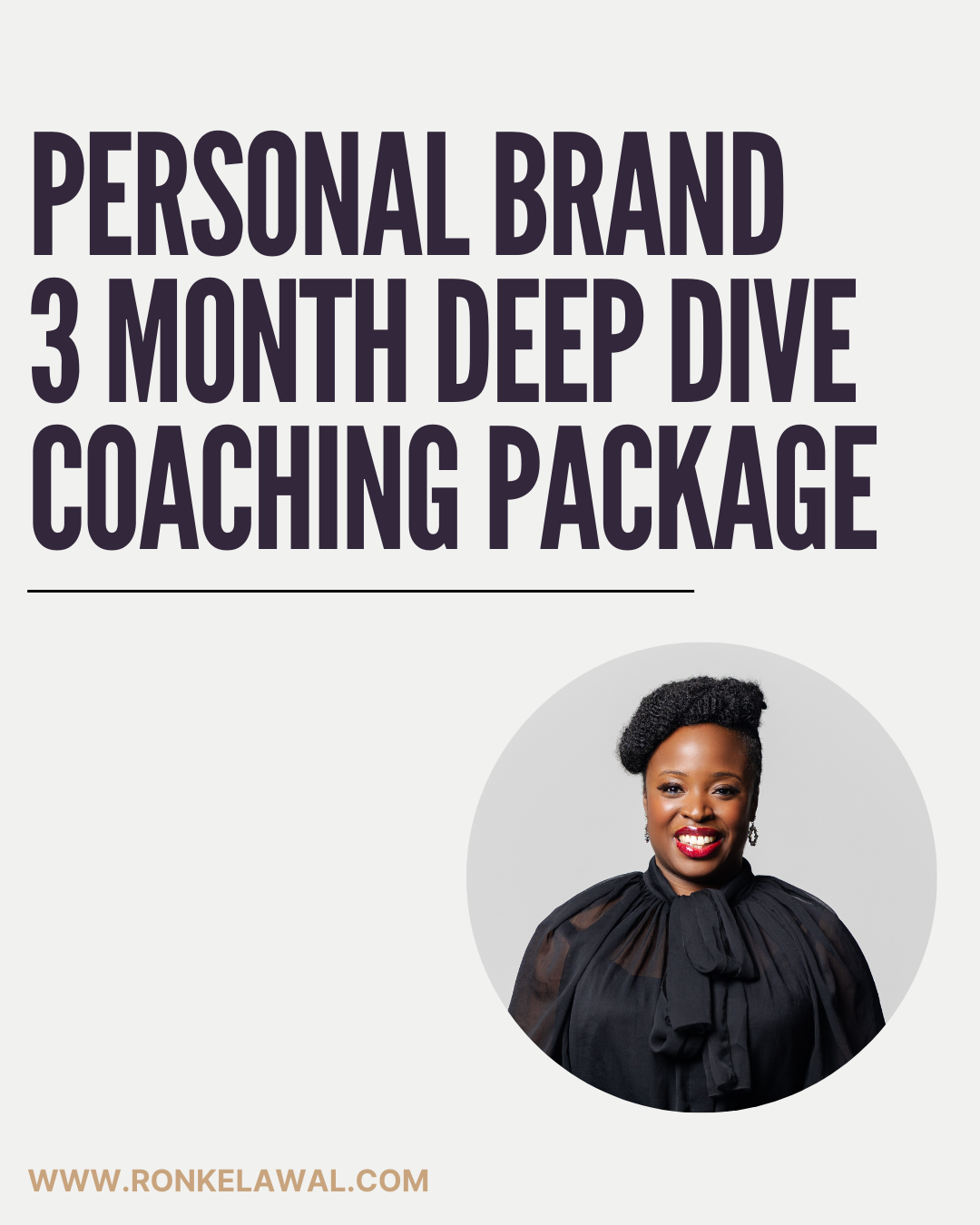
Personal Brand 3 Month Deep Dive Coaching Package is ideal for business owners, entrepreneurs, creatives or professionals who want to raise their visibility and business credibility through dedicated and intentional personal brand coaching.
This coaching package is for you if:
You have been working hard in your sector for many years but do not get the recognition that you feel like you deserve.
You are tired of doubting yourself and limiting yourself in your sector.
You are often overlooked for exciting new opportunities in your sector.
You are ready for a breakthrough as a leader in your sector.
You have goals that you have buried because of your lack of confidence and are constantly concerned with what other people will think.
You want to widen your circle of influence beyond the people who currently know you.
You are frustrated with the way your online footprint represents you.
You know something is holding you back and need a passionate, honest and pragmatic personal branding coach to take you to the next level.
Clients who have booked this package have left with renewed confidence in their goals and aims; established clarity as it pertains to how they position themselves in their industries and have attracted exciting opportunities which have led to career and business growth. Read what past clients have to say about the personal brand coaching sessions here.
What we will cover over the course of our 3 months:
The Power of a Personal brand - how having a strong personal brand can open up new opportunities in your business or career journey.
Mindset and confidence review - discuss barriers and limitations and how to overcome them.
Harnessing your voice - Knowing and understanding what your message is, who your audience is and how to reach them.
Using PR to enhance your profile - Using public relations strategies to enhance your public profile.
Media training and visibility - how to engage with the press
Identifying your values & Knowing your purpose - Understanding what your brand is and how you can maintain your integrity and authenticity.
Social Media strategy - How to use social media platforms to raise your visibility.
Understanding your audience - unpacking who your audience is and why you want to engage with them
Public Speaking Tips - Advice and guidance on becoming a more confident public speaker.
Measuring Success - Assessing Long term goals and celebrating success.
How it works:
Conducted within 3 calendar months or 12 weeks - must be taken consecutively unless otherwise agreed.
60 minute preparation and brainstorming call - personal branding questionnaire
Two 90 minute coaching calls/face to face meet ups each month or 3 × 1 hour sessions per month
Email check-ins in between calls/meet ups
Assignments and shared document to review progress
Key goals and targets designed to improve progress
Cancellations* must be made within 7 days of order being placed. After which point a refund will be made less a £50 termination fee. This is based on no work being undertaken. If work has already commenced services are not refundable but transferable.
Cancellations on the grounds of a change of business circumstances.