Visibility Is Not Vulnerability: Why Being Seen Doesn’t Mean Being Exposed
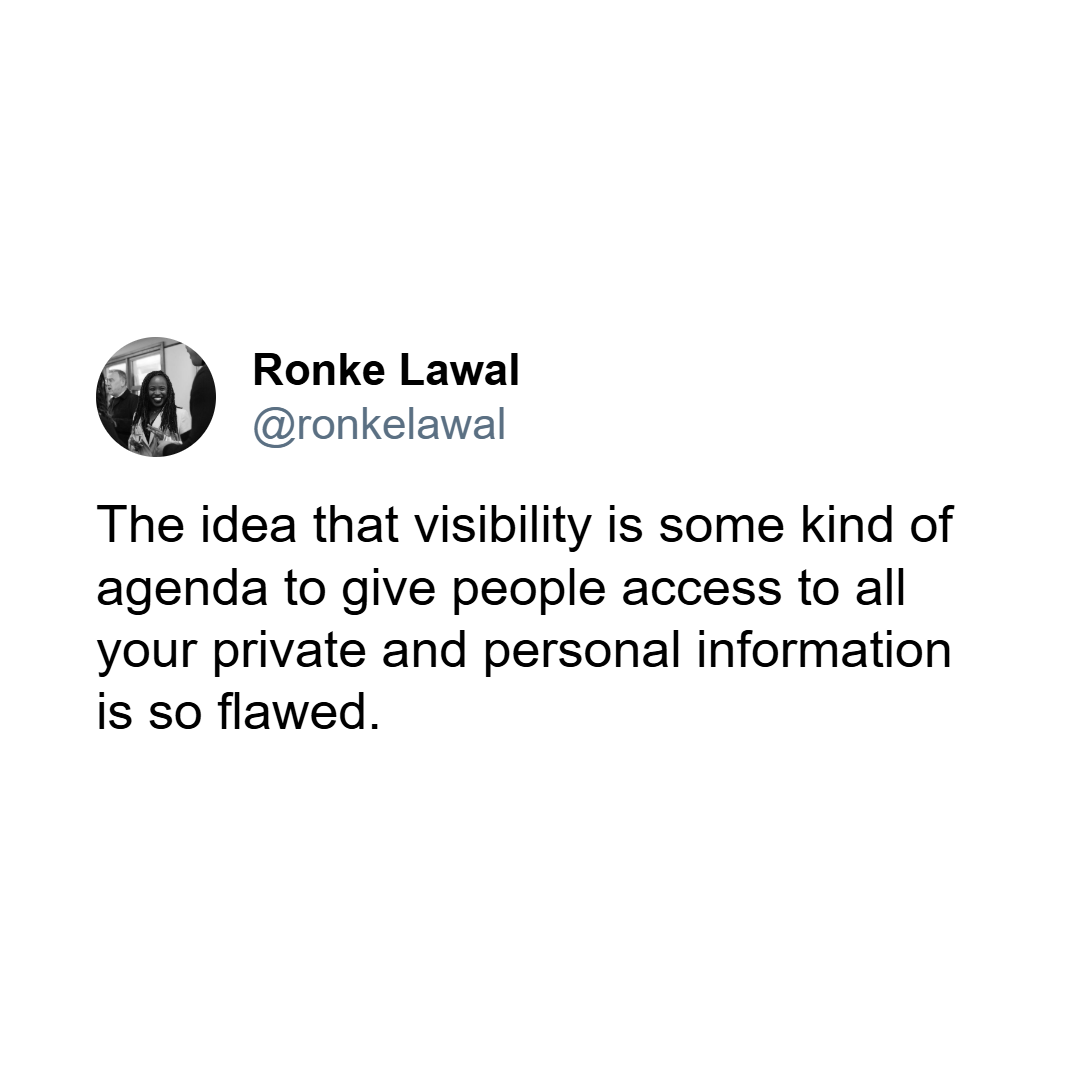
One of the most persistent misunderstandings about visibility is the belief that it requires unrestricted access to you. For many people, the idea of becoming more visible in their industry or building a stronger public presence and personal brand feels inseparable from the fear of exposure. There seems to be an idea that in order to be successful when it comes to being visible there needs to be an exposure of their personal lives, relationships, every struggle and every aspect of their private lives which is not true. This fear is understandable, especially in a culture where so much of what we call visibility has become synonymous with oversharing but the assumption itself is flawed. Visibility does not require you to make yourself fully available to the world.
Too many talented people hold themselves back under the false belief that being seen means surrendering privacy. They hear advice about building a personal brand or becoming more visible and they interpret it as an invitation to disclose more of themselves than they are comfortable with. In reality, visibility has very little to do with revealing your inner life (unless you want to commodify it) and everything to do with clarifying your external value. It is about giving people access to the parts of you that align with your goals, your expertise and the contribution you are trying to make within the industry and sector that you navigate.
At its core, visibility and personal branding is strategic; it’s the deliberate act of deciding what you want to be known for and then ensuring that the right people can recognise it. That might mean making your thinking more public, speaking more openly about your work, articulating your perspective or allowing your experience to be part of the wider conversation in your field. Visibility is not and should not be a performance of intimacy because when that happens you lose all sense of boundaries with your audience and run the risk of encouraging parasocial relationships, particularly online. Your visibility should shine a spotlight on your gifts, your talents and your capabilities, think of it as professional positioning. It should help people understand not only what you do, but why your work matters and more importantly why your presence matters.
This is where many people still cling to the outdated idea that “the work speaks for itself.” It sounds noble but it rarely reflects how influence or opportunity actually works. Work does not speak for itself because work exists within systems of attention, perception and recognition - that is undeniable. If nobody understands the significance of what you have built, if nobody can connect your name to your contribution, then the quality of your work alone cannot carry you as far as it should. Speaking on behalf of your work is part of the work and it is part of ensuring that your efforts are valued and remembered.
This is particularly important in professional spaces where visibility often shapes access. People hire who they know and recommend who they remember. This does not mean that competence is secondary to visibility but it does mean competence without visibility is often overlooked. There are many highly skilled people whose work is exceptional, but because they remain silent about it, they create space for others, sometimes less capable, to define the conversation and occupy positions of authority. (This does not negate the very real structural and systematic barriers and challenges that hold people from marginalised backgrounds back.)
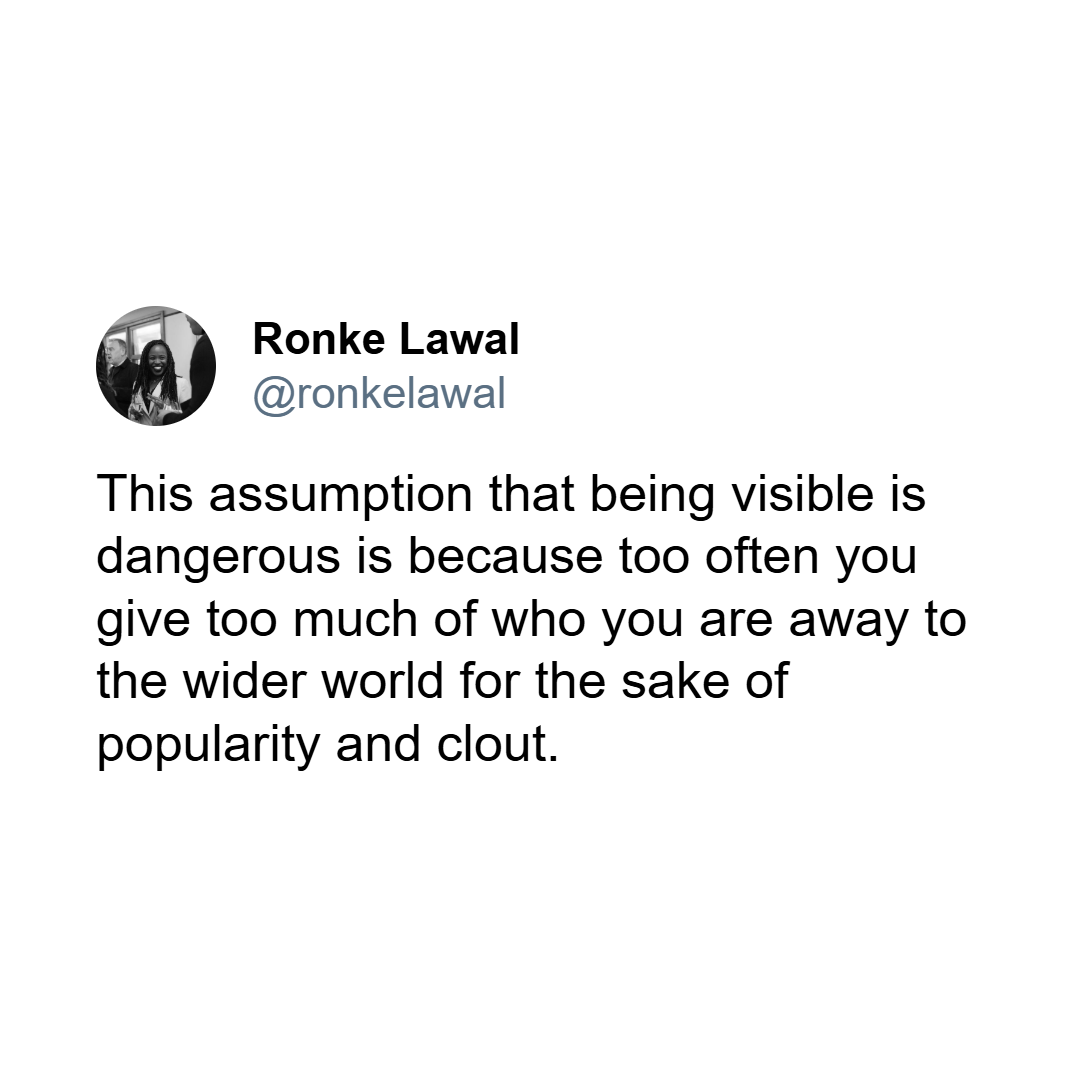
Part of the resistance to visibility comes from watching what happens when people confuse it with oversharing. In the age of social media, the boundaries between public and private have become increasingly blurred. We have normalised the idea that every personal struggle can become content, that every difficult experience must be narrated in real time and that authenticity requires emotional transparency at all costs but this model of public engagement has distorted our understanding of what it means to be visible. It has made visibility feel inherently unsafe because too often what we are witnessing is not visibility, but overexposure.
I want to remind you that the danger is not in visibility itself. The danger lies in the absence of boundaries. When people give too much of themselves away in pursuit of popularity, validation or clout they run the risk of depletion, emotionally and mentally. The problem is not that they were seen; it is that they gave public access to parts of themselves that were never necessary to achieve their goals in the first place. This is why so many people begin to associate visibility with vulnerability in the most literal sense. They have seen too many examples of people trading privacy for attention and calling it strategy. Real visibility is disciplined and draws a clear line between what you need to share to harness professional goals and what to keep to yourself to maintain your privacy. Not everything about you needs to be made public in order for you to build trust or influence. The most sustainable forms of visibility are often rooted in strong boundaries and they allow people to understand your value without creating entitlement to your inner world. If you’re smart about how you engage with your visibility you will give people access to your ideas and not unrestricted access to you.
This distinction is especially important for people whose identities have already made them hypervisible in certain spaces. For marginalised and minoritised professionals, visibility can carry an additional layer of complexity because being seen often comes with scrutiny especially for Black women. That can make the instinct to withdraw even stronger but strategic visibility remains important because it allows you to shape your own narrative rather than having it shaped for you. It creates opportunities for your expertise, rather than your assumptions, to take centre stage.
Remember that visibility should be in service of your goals not in conflict with your peace. It should help you build authority and expand your impact without demanding that you sacrifice your privacy to do it. Your work, your thinking, your talent and your contribution deserve to be visible whilst the rest of you can remain protected.
If you want support and guidance on how to be more visible and strategic with your personal branding goals get in touch.