Show Up As Yourself Even When the Room Was Not Built for You
One lesson a former mentor shared with me has never left me and it continues to shape the way I work and the work I encourage others to do. The lesson was simple but genuinely profound: show up as yourself even when the room was not built for you.
As a Black British woman, I have spent a significant portion of my career in spaces where I was the only person who looked like me. The only one expected, often without anything being said explicitly, to represent an entire community. Paradoxically, I was also the one whose voice and presence was most easily overlooked. Early in my business journey I held back more than I should have. I waited for permission to speak. I worried about being perceived as too much, or alternatively as someone not adding enough value. I allowed myself to be silenced, partly to protect myself and partly because I was genuinely afraid of what failure would mean in spaces that already felt precarious.
What I had to learn, and what took longer than it should have, is that influence and power are not things that get handed to you when the environment finally decides you deserve them. They are claimed. They come from stepping into spaces with confidence even when that confidence does not feel entirely real and from speaking your truth even when that truth makes the people around you uncomfortable. That discomfort, more often than not, is a sign that something necessary is being said.
This is also why making your expertise visible matters so deeply, particularly when the environment you are operating in was not designed to recognise it. Personal branding is not simply a tool for self-promotion, although there is nothing wrong with promoting work you have genuinely earned the right to be proud of. It is about building a reputation that reflects the full scope of your capability and the unique perspective you bring to every room you walk into. It is about creating enough visibility that the systems designed to overlook you have to work harder to do so.
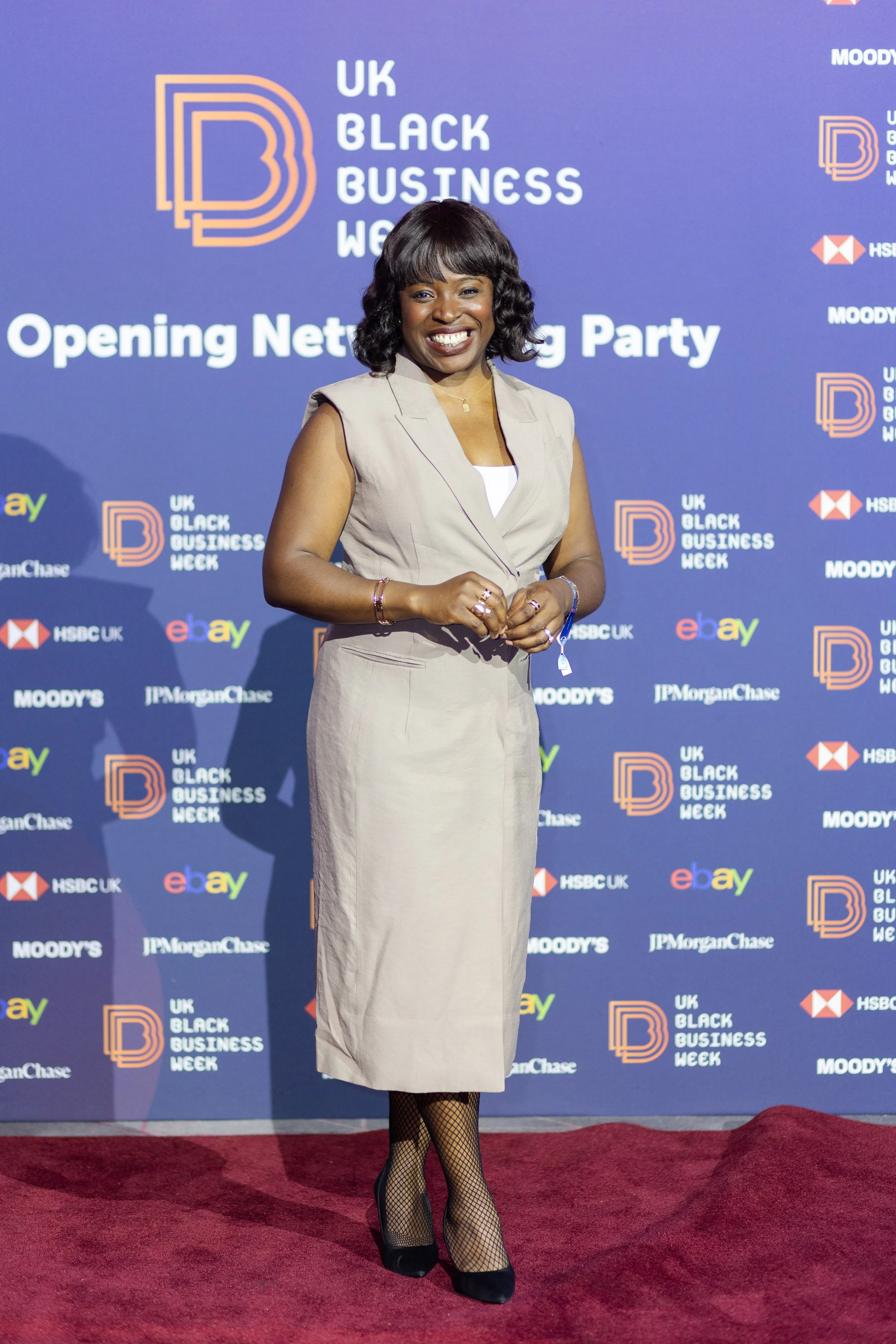
At The UK Black Business Show 2025
For women and especially for Black women, personal branding is how talent gets translated into tangible influence. It is how you make your contributions harder to ignore, harder to misattribute and harder to quietly erase from the record. When we own our expertise, project confidence in uncertain spaces and articulate our value with consistency and clarity, we do more than survive the environments we find ourselves in. We actively shape perceptions, shift expectations and create pathways not just for ourselves but for the women who are watching and preparing to follow.
But showing up, as important as it is, was never going to be sufficient on its own. Individual courage and strategic visibility can take you a long way but they cannot single-handedly dismantle structures that have been designed, whether intentionally or not, to limit access and reward conformity. Industries and organisations have to step up too and stepping up means something more specific than posting commitments or convening panels.
Real and lasting change happens when organisations build structures that proactively remove barriers rather than waiting for individuals to find ways around them. It happens when psychological safety is treated as a leadership responsibility rather than a personal resilience issue. It happens when leaders who actively sponsor and amplify marginalised voices are rewarded for doing so rather than quietly passed over in favour of those who keep things comfortable. Advocacy in this context is not simply about offering support in the abstract. It is about ensuring that opportunities are genuinely accessible, that ambition is not penalised and that the pathways to leadership are wide enough for Black women and women from other ethnic minority groups to move through them without having to shrink themselves in the process.
If there is one concrete and meaningful way to step up, it is this: use your influence to open doors, sustain communities and amplify voices that are new, not only the ones that are already familiar and already safe. Make the spaces you lead and the industries you influence genuinely safe enough for women to lead boldly, to take risks, to be wrong sometimes and to come back stronger without that being held against them.
When we do this work collectively and consistently, we do something that goes beyond individual success or individual survival. We redefine what leadership looks like for the generation that comes after us. More than any single achievement or milestone, that is what makes the work worth doing.