Are Blogs Still Relevant in our Current New Media Era?

Given that I'm writing this piece on my own blog the immediate answer to the question posed in the title is YES - blogging is still relevant. But in the ever evolving digital media and new media space it is important to consider what factors are at play when it comes to how people are engaging with and consuming content.
There are a number of reasons why blogs are created: individuals want to showcase their passion for a certain area of life (food, travel, parenting, fashion, careers etc) or business brands want to communicate to a wider audience or as a means of income as blogs with high click through rates can attract advertising revenue. For the purposes of this piece I will put the financial motives of blogging to one side and focus on the content driven motives.
In terms of traditional content marketing blogs are still a great way of communicating with key stakeholders and interest groups and a effective way to showcase thought leadership. Business owners/service providers can use blogs to showcase their skills and knowledge through owned media as opposed to waiting for earned media features/profiles. This is ideal for reputation management purposes and to maintain continued trust with audiences; it also allows for a level of control in terms of framing perception and understanding of a brand or individual. However things are changing and one wonders whether blogs are still the most effective way reaching new audiences in such a noisy digital space. Although blogs are originally a form of social media, a variety of social media platforms have put a strain on blog engagement and interaction.
TikTok and Instagram have had an impact on how content is consumed, with influencers and content creators who may have started with traditional blogging interfaces now seeing more engagement on their accounts. Let us not forget my personal favourite, twitter or as it is now known, X, is technically a micro blogging platform so aside from having more characters to play with (Twitter increased the character limit from 140 to 280 in 2018 and now longer if you have a blue tick) twitter threads have been a popular way of increasing reach and engagement in a compact real-time way that perhaps traditional blogs cannot contend with. But another issue is not only what platforms people are consuming content from but how they choose to consume content.
Podcasts and videos have had an impact on how people are consuming messages. More and more people are choosing to tune into podcasts and video content continues to be popular which is why TikTok and YouTube continue to make gains. All is not lost though! Visual platforms like Pinterest can actually drive traffic to blogs if used consistently and strategically.
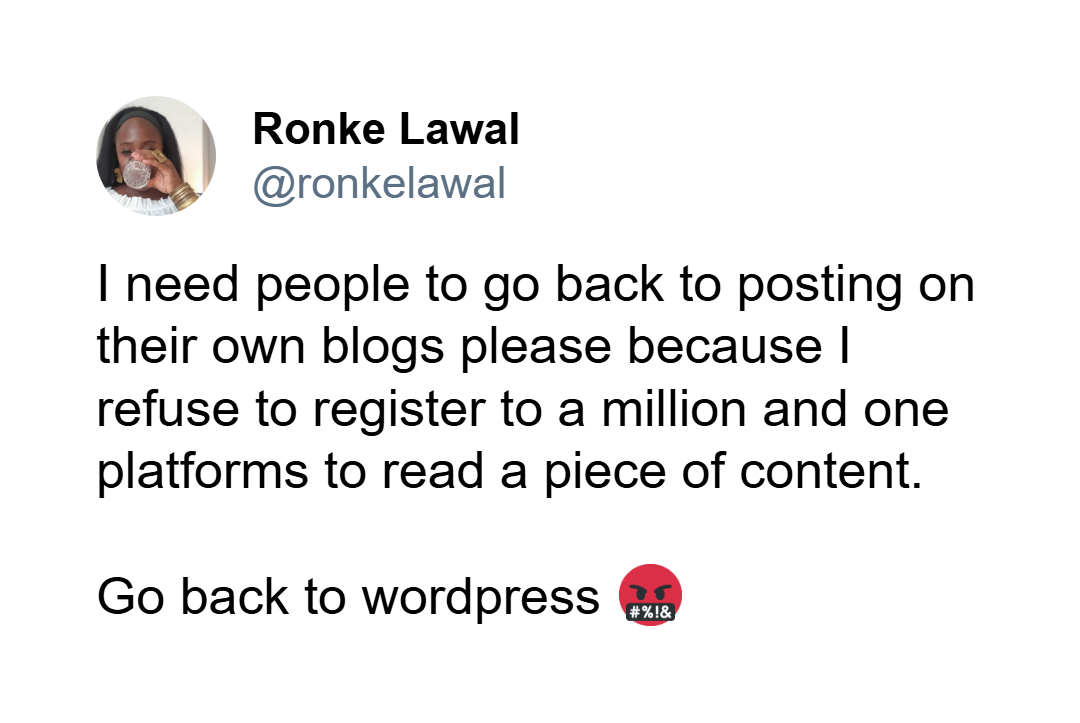
The rise of substack and medium as a means of communicating with audiences reflects that people still have an appetite for long form reading and writing but I will say that personally I have subscription fatigue. I would much rather read blogs on self-hosted websites or platforms like wordpress. However you decide what works best for you and how you want to connect with your audience.
Blogs can integrate new media formats in a way that maintains authenticity as well as relevance. Authenticity within the blogging arena has always been its winning factor - blogs allow for a targeted approach to communication which connects with a key audience in a way that can sometimes be lost in the busy atmosphere of the digital landscape. And whilst metrics may reflect that engagement or clicks aren't necessarily at their optimum, should we be measuring a blog simply by the number of clicks in order to make it relevant? Yes measurement is important probably more so when focus on income generation but surely blogs don't always have to feed into the same capitalist beast that eats away at the very essence of creativity and connection. Perhaps what we should really be focusing on is the impact of content not the numbers and if we do blogs will always be relevant.